HYBRID EVENT: Join us in person in Singapore or attend virtually from anywhere.

Phytochemical diversity in the flora of the Western Ghats- An investigation through hyphenated mass spectrometric techniques

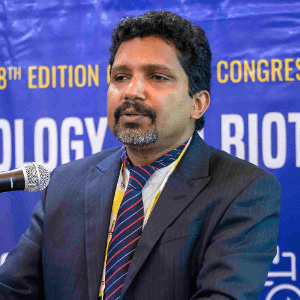
Rameshkumar K B
Jawaharlal Nehru Tropical Botanic Garden and Research Institute, India
Title : Phytochemical diversity in the flora of the Western Ghats- An investigation through hyphenated mass spectrometric techniques

Abstract:

The plant kingdom represents an extraordinary reservoir of molecules, synthesized from the fascinating laboratory of plants, and Phytochemistry deals with the diversity of such compounds. The Western Ghats, one among the 36 global biodiversity hotspots, harbor nearly 7500 flowering plants, of which 1250 are endemic to the region. The present study reports the phytochemical diversity of selected plants of the Western Ghats through hyphenated mass spectrometry techniques GC-MS and LC-MS. The volatile chemicals of plants were generally analysed through GC-MS of essential oils or head space, while the non-volatile compounds were analysed through LC-MS of various solvent extracts. LC-MS studies of 13 Garcinia species revealed distribution of bioactive constituents such as biflavonoids, xanthones and acids, while GC-MS studies reported the genus as rich source of volatile terpenoids and aliphatic compounds. Distribution of piperamides, phenolics and terpenoids in the fruits and leaves of ten Piper species were studied by various LC-MS methods.  Direct analysis in real time mass spectrometry (DART-MS) has been found as a rapid and reliable tool for demarcation of the medicinal herbs Piper nigrum, P. longum and P. chaba. Also the chemotaxonomic marker compounds were determined for Piper species based on leaf volatile chemical studies through GC-MS. Several new natural sources of aroma compounds such as camphor, safrol and linalool were discovered through the GC-MS studies of Cinnamomum species from the Western Ghats. The hepatotoxic phenyl propanoid coumarin in cinnamon samples (C. verum) were found within the tolerable daily intake limit by UHPLC-ESI-Qqq-LIT-MS method. HPLC-QTOF-MS studies on the distribution of phorbol esters in Euphorbia species revealed that the toxic phorbol ester TPA was absent, while the cytotoxic ester prostatin was present in the all the 13 Euphorbia species studied. The floral head space volatiles of around 100 species have also been investigated through HS GC-MS analyses. The presentation discusses the application of the chemical profiling in chemical ecology, atmospheric chemistry, integrated pest management, food quality and chemotaxonomy. More than 80% of the endemic flowering plants of the Western Ghats region are hitherto uninvestigated for their chemical constituents and the present study highlights the application of various hyphenated MS techniques in chemical profiling of the unexplored flora.

Audience Take Away Notes:

  • Floristic diversity of the Western Ghats
  • Phytochemical diversity
  • Phytochemical techniques
  • Hyphenated mass spectrometric techniques GC-MS and LC-MS
  • Application aspects of Phytochemical profiling

Biography:

K. B. Rameshkumar took his M.Sc Chemistry degree from St. Thomas College, Thrissur in 1997 and joined Jawaharlal Nehru Tropical Botanic Garden and Research Institute (JNTBGRI), Thiruvananthapuram in 1998 as a scientific staff. He took his Ph.D in Chemistry in the topic, ‘Phytochemical investigation of some Indian medicinal plants’from the University of Kerala, Thiruvananthapuram in 2008. The area of his specialization is Phytochemistry and the current interests are isolation and structure elucidation of phytochemicals, hyphenated analytical techniques, especially GC-MS and LC-MS, chemistry of essential oils and fixed oils, chemotaxonomy, chemical ecology, fragrance creation and herbal technology start-ups. In the tenure of 28 years of research, he had worked on the phytochemistry of several hitherto uninvestigated endemic plants of the Western Ghats region and identified new compounds and new natural sources of aromatic and bioactive compounds, in addition to new plant species. He had received the prestigious Kerala Academy of Sciences Fellowship (FAS), Young Scientist award by the Govt. of Kerala, K.S. Manilal Award by the Indian Association for Angiosperm Taxonomy, and his students had bagged around 30 best presentation awards in various seminars. He had visited Sultan Quaboos University, Muscat, Oman in 2011, Malaysia during 2013, 2015, 2018 and 2023, Sri Lanka in 2018 and 2025, Singapore in 2024, 2025 and 2026, Bosnia 2025 and Thailand 2026. He had organized around 70 training programmes, workshops and seminars in phytochemistry related fields, and delivered around 130 invited lectures including International Seminars abroad. He was the organizing secretary of the International Seminar on Phytochemistry from 2015 onwards. He had 68 research papers with a total impact factor >120, and 2 books on Phytochemistry of Garcinia species, and Cyperaceae species, in addition to more than 170 abstracts in seminar proceedings, 28 general articles and has an H index of 24. He had produced 7 Ph.Ds and supervised more than 60 M.Sc dissertation students. He is the Executive Council Member, Society for Ethnobotanists, Kerala Chapter, and Kerala Academy of Sciences, Thiruvananthapuram, and the editorial board member of Journal of Natural Medicines. He was a member of the Board of Studies in Chemistry, Mar Ivanios College, Thiruvananthapuram, Member, Research Advisory Council, Dale View College of Pharmacy, Thiruvananthapuram, and Member, Research Advisory Committee, Arya Vaidya Sala, Kottakkal. He was the General Secretary of Kerala Academy of Sciences, a premier professional body of Scientists and Academicians in Kerala, from 2018 to 2024. He is the Scientist-in Charge of the Central Instrumentation Facility at JNTBGRI, and currently holding the position of Senior Principal Scientist and Head of the Division, Phytochemistry and Phytopharmacology Division, KSCSTE-JNTBGRI, Thiruvananthapuram.

WhatsApp